KubeCon Europe 2026 Recap: Where Kubernetes Is Headed | VEXXHOST
VEXXHOST's recap of KubeCon Europe 2026 in Amsterdam — key trends in managed Kubernetes, data sovereignty, platform engineering, AI infrastructure, and security.

Perspectives, mises à jour et histoires de notre équipe
VEXXHOST's recap of KubeCon Europe 2026 in Amsterdam — key trends in managed Kubernetes, data sovereignty, platform engineering, AI infrastructure, and security.
The EU AI Act takes effect August 2026. Compliance starts at the infrastructure layer. Learn why sovereign AI needs OpenStack, Kubernetes, and Atmosphere.
Learn how a lightweight keystoneauth1 plugin brings your existing browser-based MFA and SSO to the OpenStack CLI, with no changes to any client tools.

VEXXHOST's recap of KubeCon Europe 2026 in Amsterdam — key trends in managed Kubernetes, data sovereignty, platform engineering, AI infrastructure, and security.
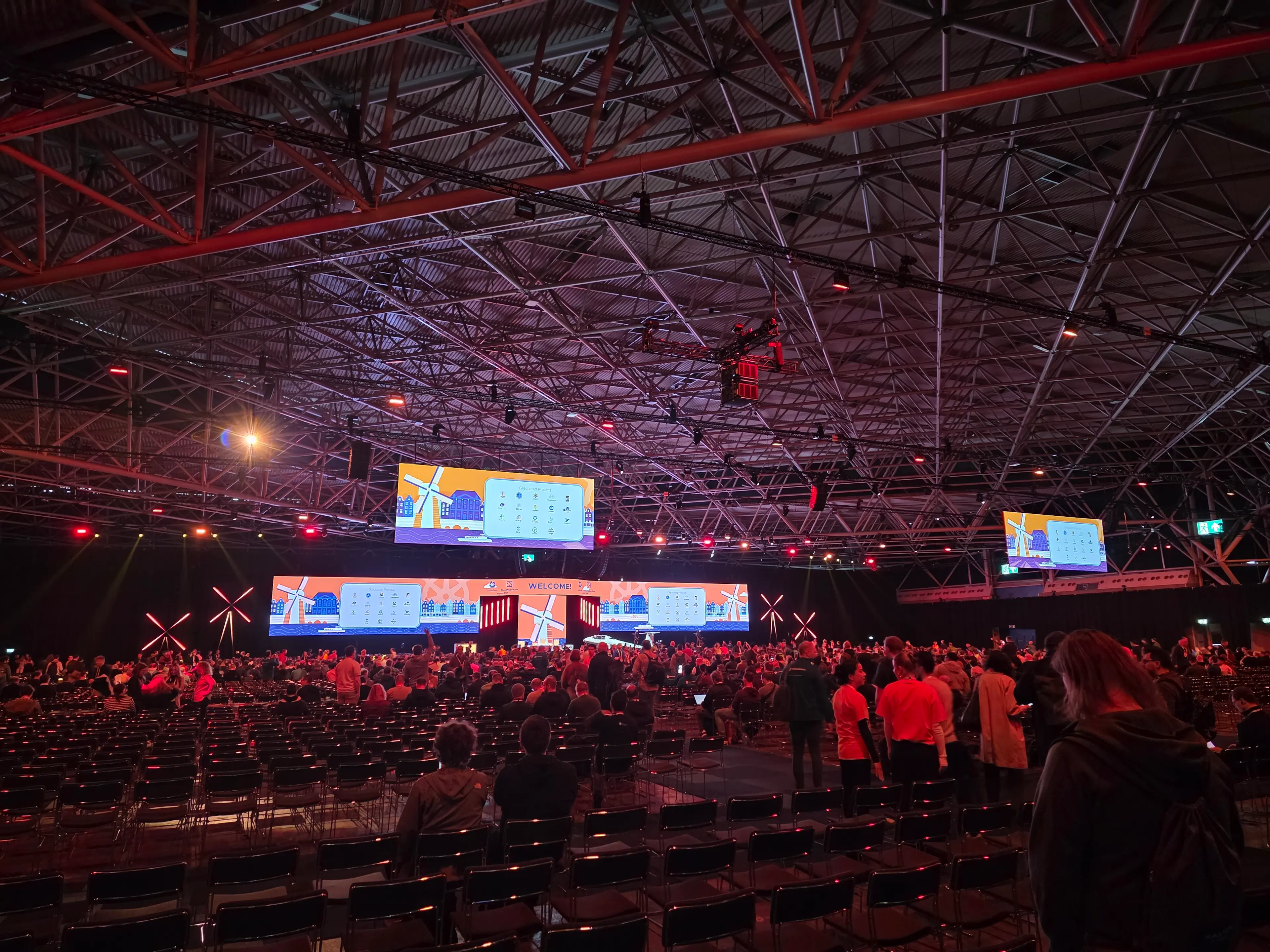
KubeCon + CloudNativeCon Europe 2026 took place in Amsterdam from 23–26 March, and it was a fitting host for what turned out to be the largest KubeCon in the event's history. The city has a way of making things feel considered, and this year's conference carried some of that energy into the RAI Amsterdam itself. But the real substance was in the conversations, and there were a lot of them.
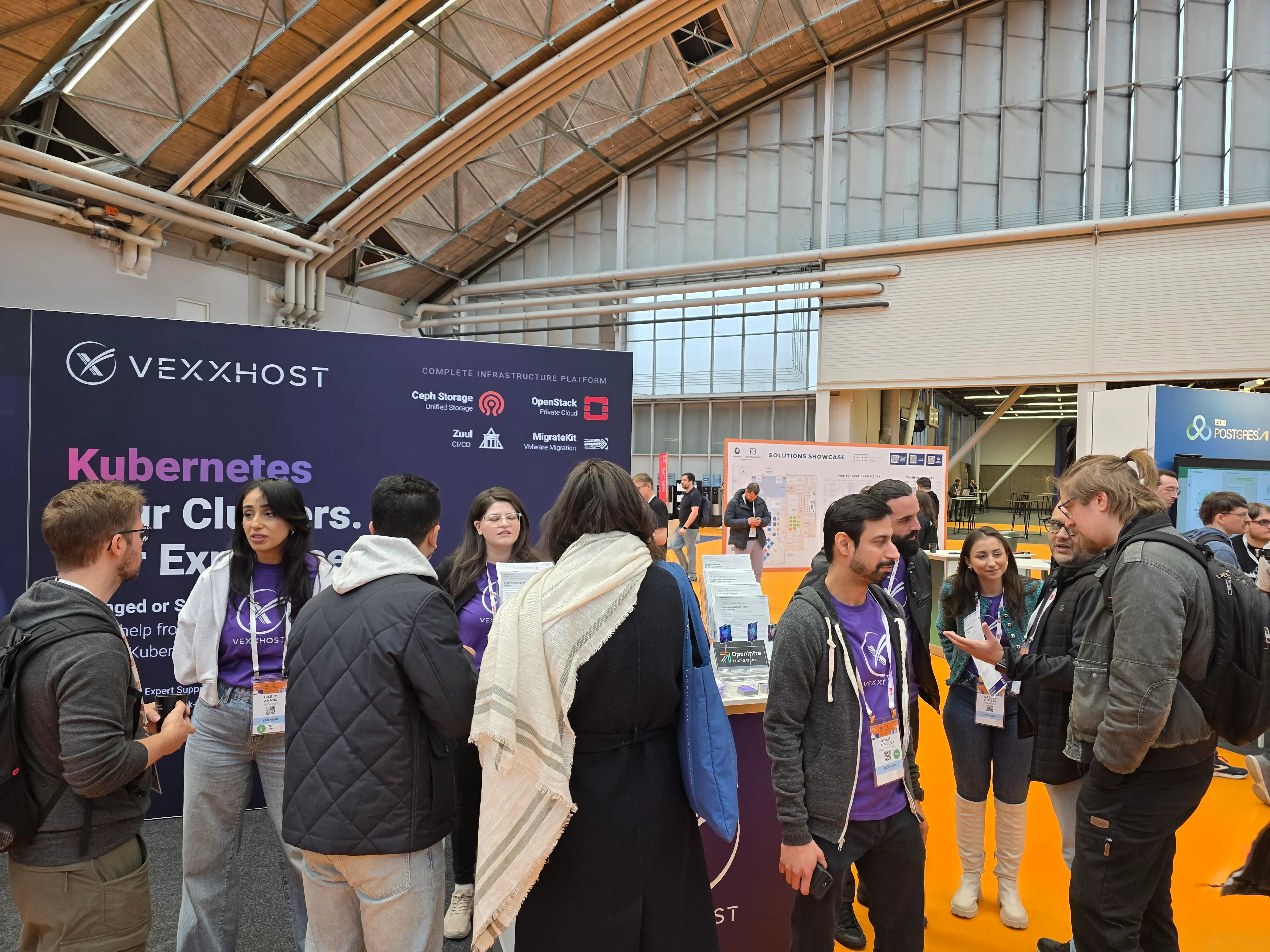
The VEXXHOST team spent three days on the floor talking to engineers, platform teams, and infrastructure leads from across the cloud native ecosystem. Hundreds of conversations in, a few clear themes emerged.
This was the event where we introduced Navos to the broader cloud native community for the first time.
The short version: Navos gives you production Kubernetes on any cloud — with built-in monitoring, security scanning, and expert support. 100% upstream Kubernetes and Cluster API. No fork. No lock-in. Deploy on AWS, Azure, GCP, OpenStack, or bare metal. Run it yourself with our guidance or let us operate it entirely — on our cloud or in your data center.
That last part mattered more than we expected. The most common conversation at the booth wasn't "what features do you have?" — it was "can I get production-grade managed Kubernetes without giving up control of where it runs?" Navos was built for exactly that question, and Amsterdam validated it.
We also brought stroopwaffles — fresh, cooked on-site at the booth. It's Amsterdam, after all. Plus, branded socks, stickers, and two giveaways: a Nintendo Switch 2 and an iPad. The waffles might have drawn people in, but they stayed for the Kubernetes conversations.
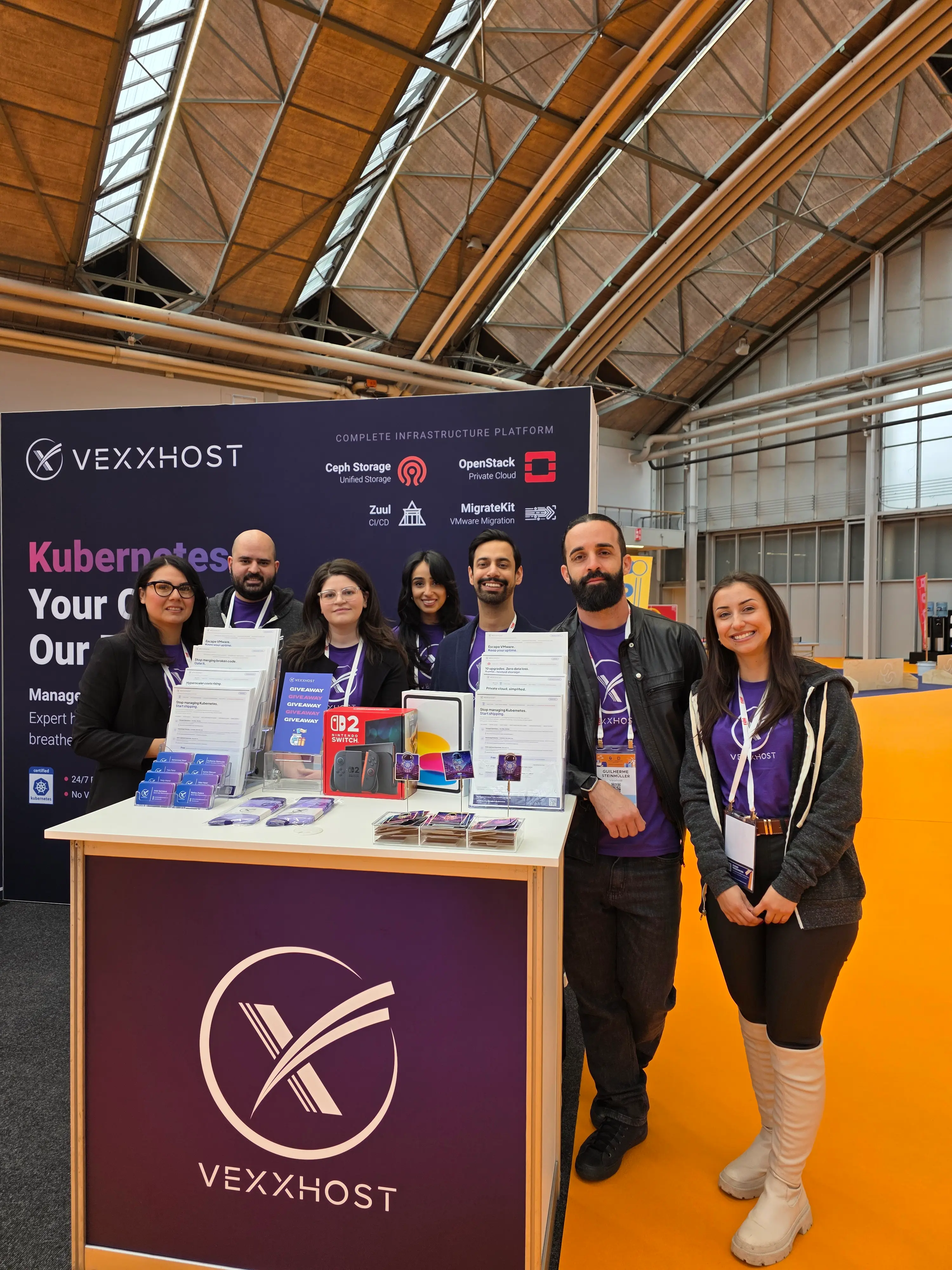
A few years ago, "just use managed Kubernetes" was sometimes said dismissively — a shortcut for teams that didn't want to deal with the hard parts. That framing has shifted. The teams we spoke with at KubeCon + CloudNativeCon EU are running serious workloads, and they're increasingly clear-eyed about what they actually want from a managed offering: operational reliability, genuine expert support, and freedom from vendor lock-in.
The self-hosted confidence is real and growing. Engineers who used to navigate the Kubernetes ecosystem cautiously are now leaning into it, but they're also more sophisticated about what "self-hosted" actually means. It doesn't mean going it alone. It means owning your infrastructure decisions while getting the support needed to execute them well.
This is exactly why we built Navos the way we did. Your manifests, your Helm charts, your clusters — they're yours. Leave any time. That promise got more nods at the booth than almost anything else.
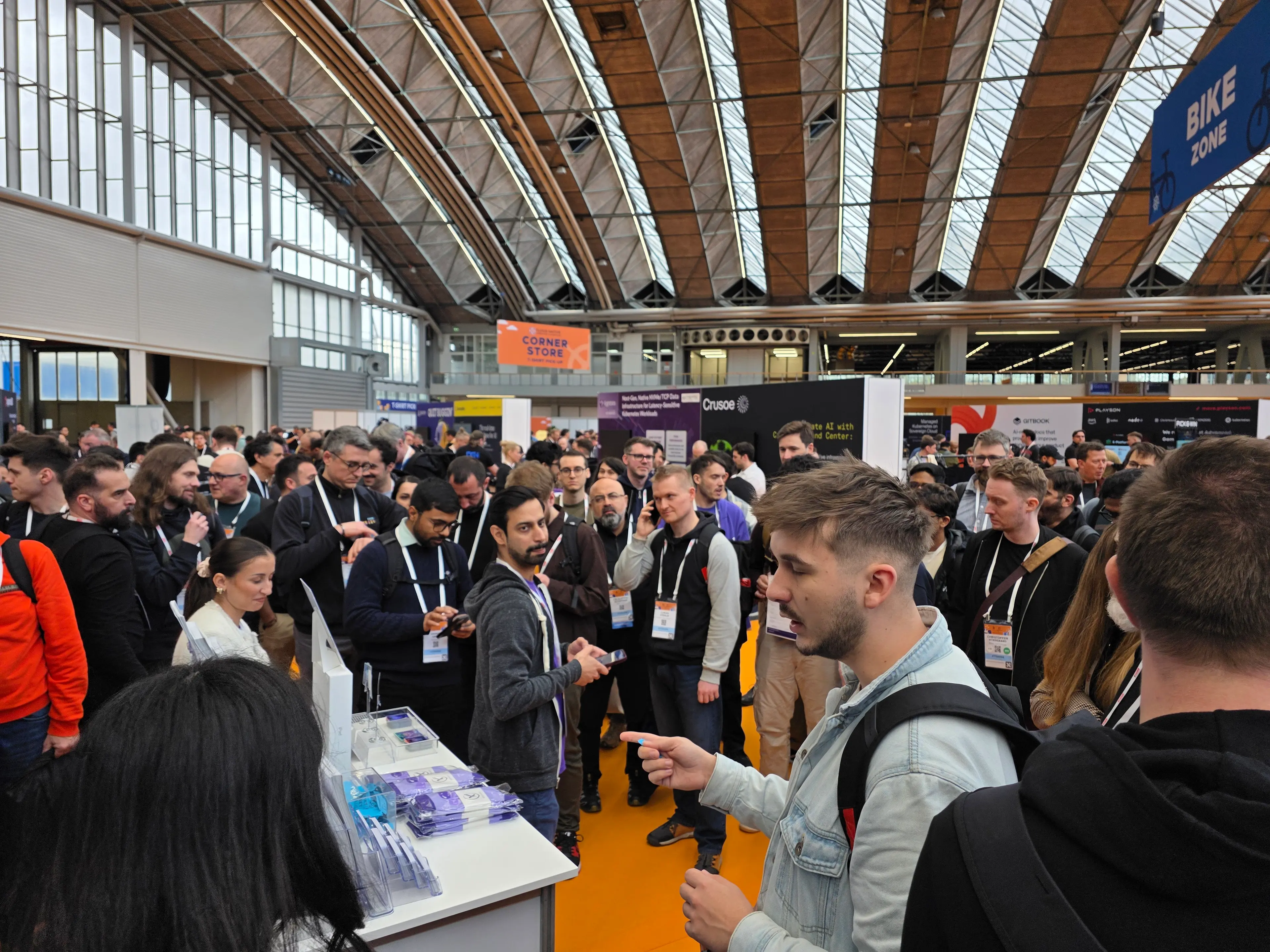
One conversation at the booth stuck with us. A platform lead from a mid-size European fintech described their setup: two engineers, thirty-something clusters, and a growing internal customer base of developers who all needed self-service access to production-grade environments. They weren't looking for another tool. They were looking for a way to stop being the bottleneck.
That story wasn't unique. The Platform Engineering track at KubeCon addressed exactly this tension, building and customizing cloud native platforms, automating infrastructure operations, and enhancing self-service workflows for developers. The demand for internal platforms is outpacing the teams available to build them.
This is the heart of what Navos solves. When monitoring, security scanning, upgrades, and compliance reporting come built in rather than bolted on, platform teams can focus on what they're actually building instead of what's keeping them up at night.
This came up repeatedly, and it went deeper than "our data needs to stay in the EU." The question teams are asking now is more pointed: who actually controls the infrastructure, and under which jurisdiction? Picking a cloud region from a hyperscaler headquartered elsewhere doesn't fully answer that question anymore, and more engineering teams know it.
The keynote schedule reflected this shift directly. Multiple keynotes were dedicated to sovereignty themes, including talks on cloud native regulation and sovereignty in Europe, digital sovereignty by design, and Kubernetes powering a national railway platform.
One of the most telling moments came from the CNCF awards. The 2026 Top End User Award went to SNCF (the French national railway) for its large-scale cloud migration and innovative private cloud strategy, using Kubernetes as a unified abstraction layer across public and private environments — with an OpenStack private cloud underpinning its sovereign, on-premise workloads.
For VEXXHOST, this is a conversation we've been having with customers for years. OpenStack private cloud gives organizations genuine infrastructure ownership — not just geographic proximity. When the CNCF's top end-user award goes to an organization that combined Kubernetes with OpenStack for exactly this reason, it validates a pattern we've been building around for a long time. Navos deploys on VEXXHOST data centers in Montreal, Santa Clara, Amsterdam, or your own premises and the appetite for that kind of control has grown noticeably. KubeCon + CloudNativeCon EU made it clear this isn't a niche concern anymore.
Compliance kept coming up at the booth — not as an abstract concern but as a concrete procurement requirement. Teams in regulated industries wanted to know: is your platform SOC 2 certified? Can you prove Kubernetes conformance? What does the audit trail look like? VEXXHOST holds SOC 2 Type II certification and Navos provides certified Kubernetes conformance, which meant those conversations moved fast from "can you?" to "how soon?"
The urgency behind those questions has a source. Europe's Cyber Resilience Act is shifting SBOMs from a transparency initiative to a legal necessity. Open-source security is moving from best practice to baseline expectation — hardened images, supply chain visibility, and exploit intelligence are becoming part of the minimum viable security posture. The teams at KubeCon weren't asking whether this matters. They were asking how to operationalize it.
It would be disingenuous to write about KubeCon + CloudNativeCon 2026 without acknowledging the AI layer draped over nearly everything. The opening keynote set the tone: cloud native is still growing, but the center of gravity is shifting toward AI infrastructure, especially inference.
The biggest announcements reinforced this direction. NVIDIA joined CNCF as a platinum member, donated its GPU Dynamic Resource Allocation (DRA) Driver to the Kubernetes project, and pledged $4 million over three years to provide GPU access for CNCF projects. IBM Research, Red Hat, and Google Cloud contributed llm-d, a distributed inference framework, to the CNCF as a sandbox project.
What was most interesting, though, was the infrastructure work happening beneath the AI surface: teams building out private, sovereign environments to run AI workloads without exposing sensitive data to public cloud APIs. BYOC (bring your own cloud) models are gaining real traction, particularly among companies in regulated industries who need the capability without the compliance exposure. At the booth, the AI questions weren't "do you support GPUs?" — they were "can I run inference on my own infrastructure with your managed Kubernetes layer on top?" That's a fundamentally different conversation than it was even a year ago.
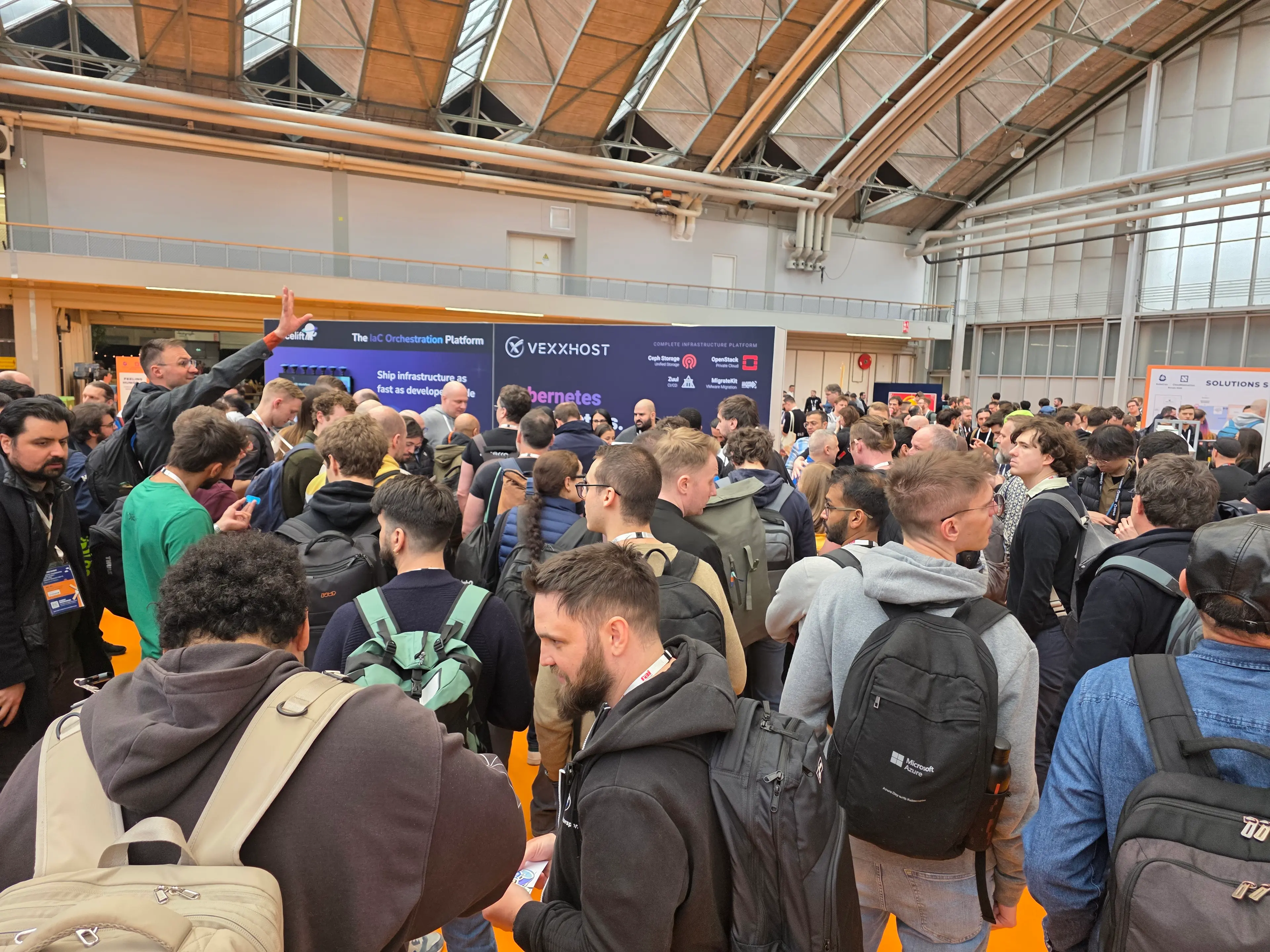
The thing about KubeCon at this scale is that the signal-to-noise ratio on the expo floor can vary. What made this year stand out for us wasn't only the volume of foot traffic — which was enormous given it was the largest KubeCon ever — but also the quality of who stopped.
Platform engineers with genuinely complex cluster challenges. Infrastructure leads evaluating real alternatives to their current setup. Teams building things that are actually hard.
These are exactly the conversations VEXXHOST exists to have. Our stack is open source — built on Cluster API, Prometheus, Grafana, Cilium, Argo CD, and Istio — designed for organizations that have outgrown the defaults and need infrastructure that can keep up with what they're building. Alongside Navos, our OpenStack private cloud, Ceph unified storage, and Zuul CI/CD round out a platform built for serious production workloads. Amsterdam gave us three days of those conversations, and we're already thinking about what comes next.
If there's a single thread that ran through KubeCon + CloudNativeCon Europe 2026, it's this: the cloud native ecosystem is maturing, and the teams building on it are making harder, more intentional decisions about where their infrastructure lives, who operates it, and what they're willing to give up for convenience. The answer, increasingly, is "not much."
That shift is good for the ecosystem, and it's good for companies like VEXXHOST that have been building for this moment — open source, upstream-first, sovereignty-ready, and designed to meet engineering teams where they actually are.
If you were at the event and stopped by our booth — whether for the Kubernetes conversation or the stroopwaffles — it was good to meet you.
If you didn't make it but want to continue the conversation, schedule a chat!
Choose from Atmosphere Cloud, Hosted, or On-Premise.
Simplify your cloud operations with our intuitive dashboard.
Run it yourself, tap our expert support, or opt for full remote operations.
Leverage Terraform, Ansible or APIs directly powered by OpenStack & Kubernetes