Sovereign by Architecture: Building AI Infrastructure for the EU AI Act
The EU AI Act takes effect August 2026. Compliance starts at the infrastructure layer. Learn why sovereign AI needs OpenStack, Kubernetes, and Atmosphere.

Perspectives, mises à jour et histoires de notre équipe
The EU AI Act takes effect August 2026. Compliance starts at the infrastructure layer. Learn why sovereign AI needs OpenStack, Kubernetes, and Atmosphere.
Learn how a lightweight keystoneauth1 plugin brings your existing browser-based MFA and SSO to the OpenStack CLI, with no changes to any client tools.
Hyperscaler AI looks fast but hides long-term lock-in and rising costs. See how OpenStack and Kubernetes deliver GPU infrastructure you actually control.

DevOps blocked by buying cycles? Turn procurement into an ally with clear requirements, day-2 questions, SLAs, and measurable ROI.
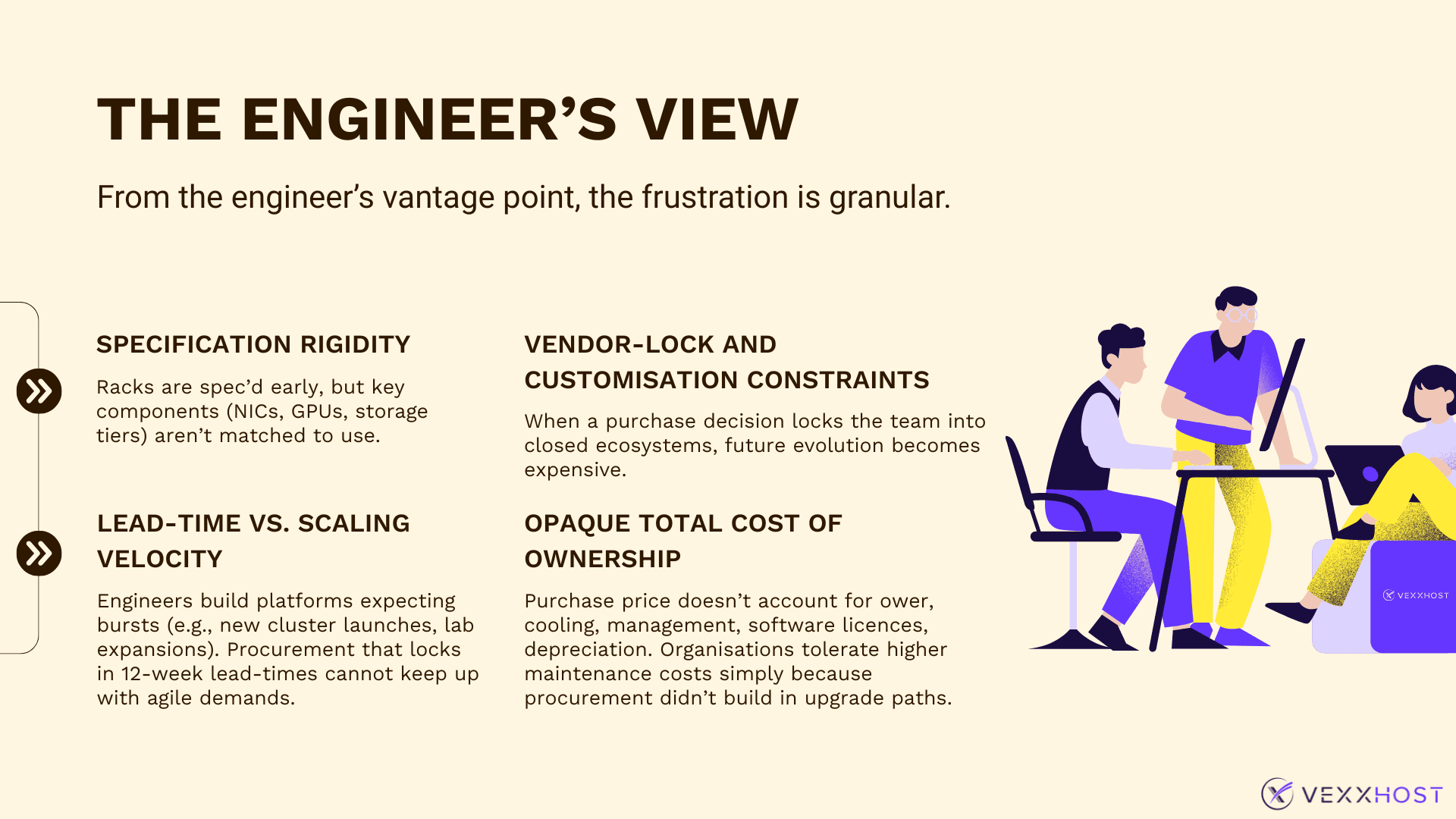
If you're running distributed apps, container platforms, or AI workloads, your infrastructure choices directly affect what you can ship and how fast you can ship it. When you ask most infrastructure engineers what slows them down, and one answer keeps coming up: procurement.
Procurement teams are under pressure too - to cut spending, manage vendor risk, and ensure every purchase meets compliance. But when they approach infrastructure the same way they approach SaaS renewals or office equipment, things go wrong.
Anything and everything from platform drift, unexpected downtime, to runaway costs. Ultimately, this leads to missed deadlines.
This breakdown happens because infrastructure isn't a commodity purchase. When engineering and procurement work together, you get better uptime, faster delivery, and lower long-term costs. When they don't, you get expensive do-overs.
Infrastructure decisions aren't like buying a pair of jeans, bringing you instant gratification. They carry a massive load. You’re committing to how the company will run workloads for, at the very least, the next 3–5 years.
Plus each decision, compute, storage, networking, orchestration, affects everything downstream.
How fast new services launch.
How quickly incidents get resolved.
How much tech debt accumulates.
Now, by focusing only on lowest cost or requiring generic feature checklists, procurement cycles treat this as a commodity purchase. This, in effect, creates platforms that don't work for the people who have to use them.
For CIOs, CFOs and procurement leadership there are multiple levers they need to consider.

McKinsey estimates that 30% of cloud spend is wasted due to misalignment between technical teams and procurement decisions.
When engineering and procurement align, you get faster time to market, lower total cost of ownership, and higher team retention. Engineers who feel heard are less likely to leave.
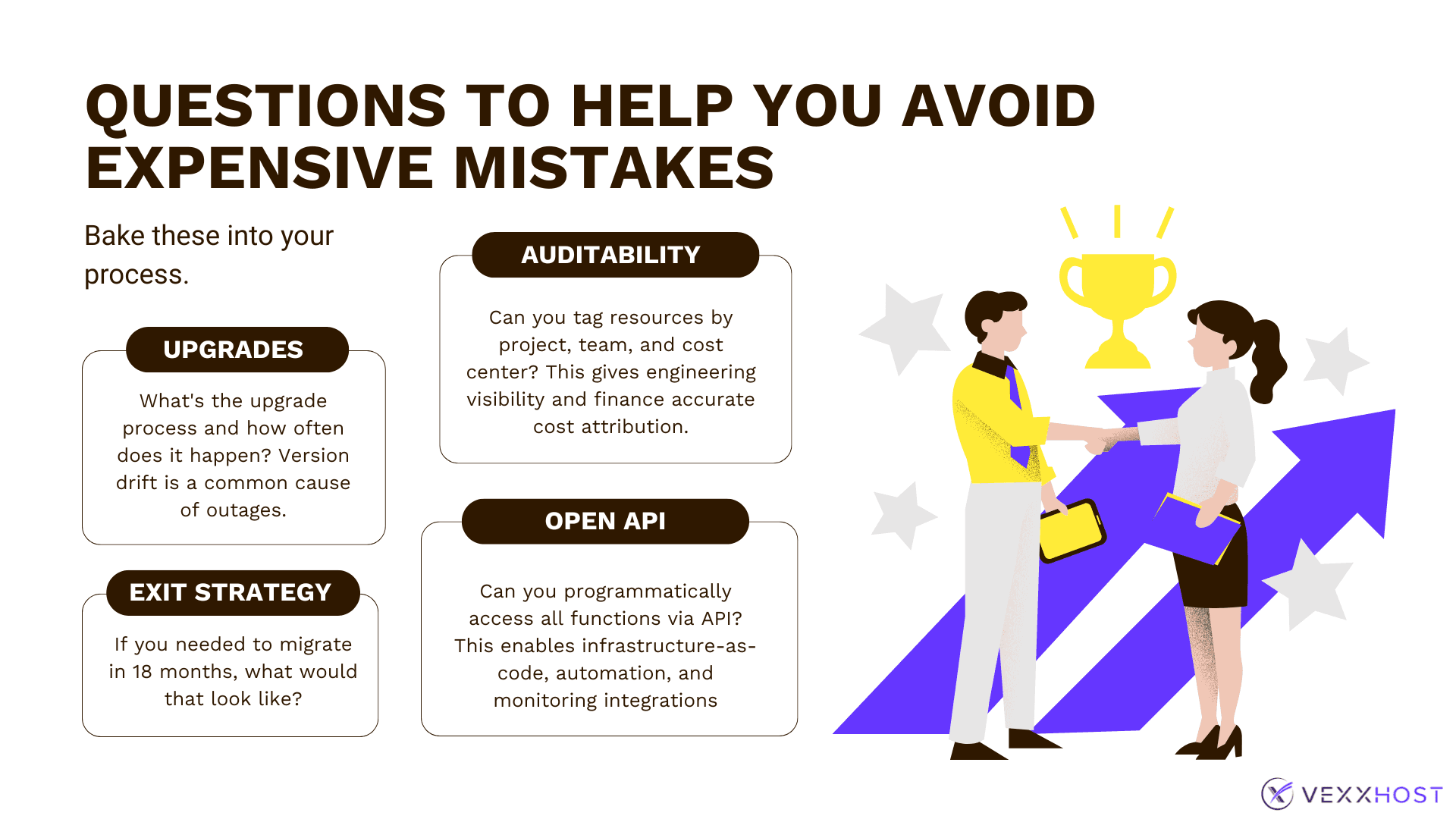
For infrastructure engineers this means that:
For procurement teams you need to:
When procurement and engineering align, three outcomes follow: improved utilisation (less retrofitting, fewer idle assets), faster engineering cycles (less lead‑time waiting), and better cost‑transparency (visibility into end‑to‑end TCO rather than just purchase price).
For leadership, the ability to tie infrastructure spend to engineering throughput and product velocity turns procurement from cost‑centre into enabler.
Now, you don't have to pick between budget discipline and operational velocity. When both teams understand the requirements, you get both.
If you're moving away from VMware, hyperscalers, or legacy private clouds, VEXXHOST's Atmosphere platform provides OpenStack-based infrastructure with built-in automation, observability, and compliance defaults.
Procurement teams can work with VEXXHOST experts to align contracts with phased rollouts, usage-based billing, and clear SLAs. Engineering teams get HA topologies, Ceph (or any third-party you prefer) storage, Kubernetes integration, and real-time telemetry. You don't have to start from scratch.
Choose from Atmosphere Cloud, Hosted, or On-Premise.
Simplify your cloud operations with our intuitive dashboard.
Run it yourself, tap our expert support, or opt for full remote operations.
Leverage Terraform, Ansible or APIs directly powered by OpenStack & Kubernetes