Sovereign by Architecture: Building AI Infrastructure for the EU AI Act
The EU AI Act takes effect August 2026. Compliance starts at the infrastructure layer. Learn why sovereign AI needs OpenStack, Kubernetes, and Atmosphere.

Perspectives, mises à jour et histoires de notre équipe
The EU AI Act takes effect August 2026. Compliance starts at the infrastructure layer. Learn why sovereign AI needs OpenStack, Kubernetes, and Atmosphere.
Learn how a lightweight keystoneauth1 plugin brings your existing browser-based MFA and SSO to the OpenStack CLI, with no changes to any client tools.
Hyperscaler AI looks fast but hides long-term lock-in and rising costs. See how OpenStack and Kubernetes deliver GPU infrastructure you actually control.

Learn how to run AI workloads on Kubernetes and OpenStack in 2026 with best practices for GPUs, storage, security, and hybrid cloud.
In 2026, AI workloads are becoming core infrastructure requirements, right alongside Kubernetes, storage, networking, and security. Enterprises aren’t just asking if they can run AI workloads. They’re asking:
For many teams, the answer is increasingly clear:
Kubernetes orchestrates the workload. OpenStack provides the infrastructure foundation.
This combination offers a powerful, open alternative to proprietary AI platforms — especially for organizations building private or hybrid clouds.
Let’s explore what’s driving this shift, and what best practices matter most when running AI workloads on OpenStack + Kubernetes in 2026.
The last few years made one thing obvious: AI is infrastructure.
Training models, running inference pipelines, deploying AI-enabled applications — all of it depends on cloud-native systems that can handle:
Hyperscalers offer managed AI stacks, but they come with tradeoffs:
That’s why more organizations are exploring open infrastructure for AI, especially in regulated industries like healthcare, finance, and the public sector.
Kubernetes has become the default platform for modern AI workloads because it enables:
In short: AI teams want Kubernetes because it matches how software is built today.
But Kubernetes alone doesn’t solve everything.
AI workloads require infrastructure primitives underneath — compute, networking, storage, identity — and that’s where OpenStack plays a critical role.
OpenStack provides the building blocks needed to run AI at scale, especially in private and hybrid environments:
When paired with Kubernetes, OpenStack becomes a flexible foundation for AI infrastructure that stays open, extensible, and enterprise-ready.
So what does it actually take to run AI workloads successfully in this stack?
Here are the key best practices teams are adopting in 2026.
GPUs are not just “bigger CPUs.”
They require careful scheduling, isolation, and utilization tracking.
Best practices include:
In OpenStack environments, teams are also adopting stronger integration between Nova scheduling and Kubernetes GPU workloads.
The goal: maximize expensive GPU resources without operational chaos.
Training workloads and inference workloads behave very differently:
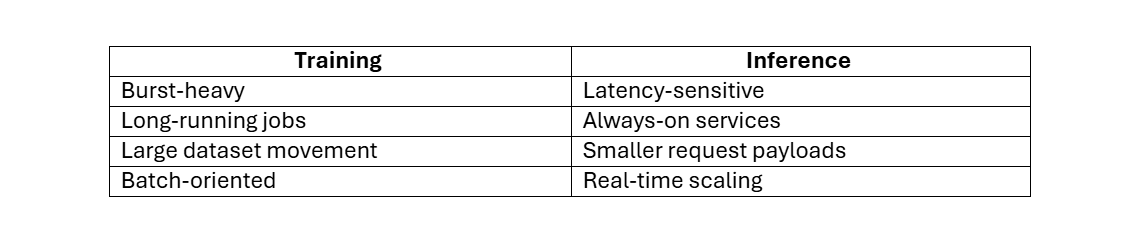
Best practice: build separate infrastructure paths for each.
OpenStack makes this easier by enabling distinct instance flavors, storage tiers, and network segmentation.
AI workloads are storage intensive.
Datasets, checkpoints, embeddings, model artifacts — they all require:
Ceph remains one of the strongest open-source answers here, especially when integrated into OpenStack and Kubernetes environments.
Best practices include:
AI is often limited not by compute, but by data gravity.
AI workloads introduce new security risks:
Best practices include:
For regulated industries, OpenStack-based private AI infrastructure provides a path to compliance that public AI platforms may not.
AI infrastructure isn’t static.
Clusters evolve constantly:
The operational burden can grow quickly unless automation is built in.
Best practices include:
In 2026, the winning platforms are not the ones that launch fast, but the ones that operate cleanly at scale.
Most organizations will not run AI in one place.
They’ll run workloads across:
OpenStack + Kubernetes provides a consistent foundation for hybrid AI strategies without forcing everything into one vendor ecosystem.
Portability matters — but operational consistency matters even more.
AI infrastructure is becoming one of the biggest themes in the cloud-native ecosystem.
At KubeCon + CloudNativeCon Europe 2026, expect major discussions around:
As a Silver Sponsor to KubeCon + CloudNativeCone Europe, VEXXHOST is excited to be part of these conversations and to help teams build AI-ready infrastructure that stays open, scalable, and enterprise-grade.
AI workloads are reshaping how infrastructure decisions are made.
The question is no longer “Can we run AI in the cloud?”
It’s:
Can we run AI without losing control, portability, and predictability?
Kubernetes provides the orchestration layer.
OpenStack provides the infrastructure foundation.
Together, they offer an open path forward for organizations building serious AI platforms in 2026.
If you’re exploring AI workloads on Kubernetes, private cloud GPUs, or hybrid infrastructure strategies, we’d love to connect.
Meet the VEXXHOST team at KubeCon + CloudNativeCon Europe 2026. Find us at Hall1, Booth #797.
Choose from Atmosphere Cloud, Hosted, or On-Premise.
Simplify your cloud operations with our intuitive dashboard.
Run it yourself, tap our expert support, or opt for full remote operations.
Leverage Terraform, Ansible or APIs directly powered by OpenStack & Kubernetes